Early Signs of Aging in Dogs: What Actually Changes First
A vet's field guide to the first measurable signs of canine aging — what's normal wear, what's early disease, and what to log before the next exam.
The early signs of aging in dogs rarely announce themselves; they show up as a half-second delay before the couch jump.
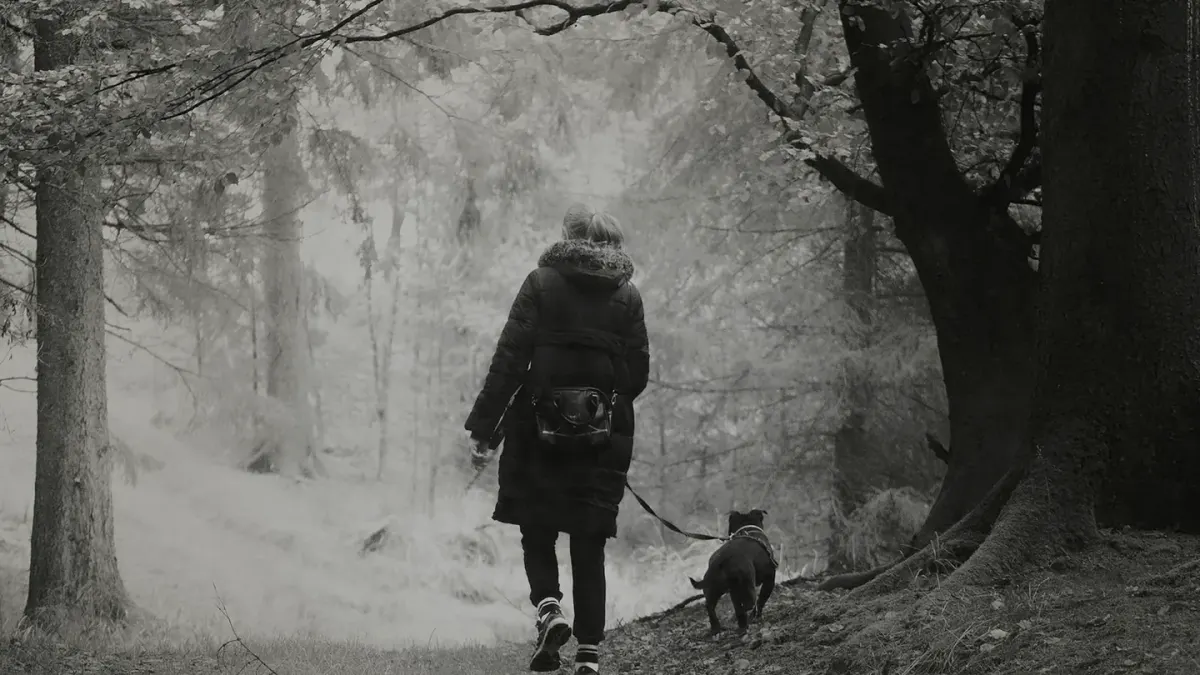
A ten-year-old Labrador named nothing in particular — just “the dog” in this scene — used to clear the tailgate of an SUV in one motion. At 68 pounds and nine years old, he started pausing at the bumper for a beat before jumping, a hesitation his owner clocked at “maybe three weeks” before she mentioned it at his annual exam. Nothing else had changed: appetite normal, stool normal, no limping on the leash. That pause was the entire chief complaint. It’s also the most common one I hear, because early aging in dogs is rarely a single symptom — it’s a change in effort for something that used to cost none.
Stabilize first, reason from physiology: before assigning a diagnosis, separate what could plausibly be structural (joints, muscle mass, disc space) from what is neurologic, metabolic, or simply behavioral learning. The tailgate hesitation could be early osteoarthritis, mild lumbosacral discomfort, reduced proprioception, or nothing more than an off day. What it is not, on one occurrence, is proof of anything. That’s the discipline this piece is built around — separating what’s proven from what’s merely plausible.
The signs that show up before the diagnosis does
According to the American Kennel Club, the earliest and most consistent markers of canine aging cluster around four systems: mobility (trouble with stairs, hesitation before jumping, stiffness after rest), sensory function (reduced response to being called, cloudier eyes), oral health (sudden bad breath signaling gum disease), and behavior (increased anxiety, forgetfulness, disrupted sleep-wake patterns). None of these are dramatic on their own. Owners tend to notice the mobility changes first because they’re visible in daily routines — getting into the car, greeting at the door — while sensory and cognitive shifts get explained away as “he’s just stubborn now.”
That explaining-away matters clinically. The 2023 AAHA Senior Care Guidelines for Dogs and Cats note that clients frequently fail to recognize early signs of cognitive dysfunction, and that earlier intervention tends to be more effective than late intervention. The guideline lists daytime sleeping paired with nighttime restlessness, decreased interaction with the household, disorientation in familiar spaces, and loss of house-training as the clinical signs most likely to be missed or dismissed as “just getting old.” AAHA also defines “senior” functionally rather than by a fixed birthday — the last 25% of a breed’s estimated lifespan — which is why a seven-year-old Great Dane and a seven-year-old terrier mix are not the same patient.
Where owners get the timeline wrong
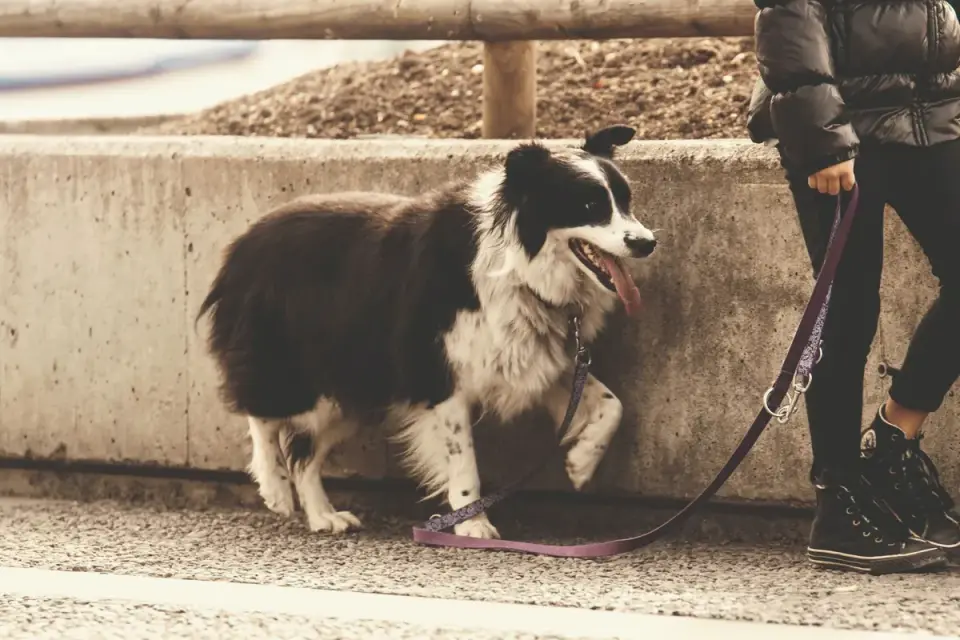
A composite worth sitting with: a 12-year-old terrier mix, 22 pounds, had been “slowing down” by the owner’s account for over a year. By day 10 of a structured log — timing how long it took the dog to stand after lying down, noting appetite, and tracking nighttime wake-ups — the actual pattern that emerged wasn’t joint stiffness at all. It was three unprompted wake-ups a night and pacing in circles before settling, a pattern that reads as cognitive dysfunction, not orthopedic disease. The owner had spent months buying joint-support products for a dog whose primary problem was behavioral and neurologic. That’s not a failure of the products; it’s a failure of diagnosis before treatment. Stabilize first means naming the actual system involved before reaching for a fix.
Structure/function ingredients have a real, if narrow, role once the underlying cause is understood. Nicotinamide riboside is an NAD+ precursor studied for its support of normal cellular function, and one manufacturer fact sheet lists a common dosing format of 120 mg per two-chew serving for that purpose — a structure/function claim, not a treatment claim, and one that says nothing about diagnosing what’s driving an individual dog’s symptoms. Quercetin is a flavonoid with antioxidant properties that has been studied for immune and cellular support, though the evidence base is uneven: a 2024 in vitro paper found that quercetin, at the concentrations tested, Pharmaceuticals (DOI.3390/ph19040525): did not affect feeding behavior in the model organism used, which is a useful reminder that “antioxidant” does not automatically mean “effective in this context.” Resveratrol carries a similar caution — an in vitro study using an estrogen-receptor agonist at 50 μg/ml found that Phytomedicine (DOI.1016/j.phymed.2026.158531): embryonic exposure accelerated development but shortened adult lifespan in the organism studied, evidence that belongs to a different model system entirely and should not be read across to dogs. Where the evidence is strong, it’s strong for narrow mechanisms. Where it’s thin, it’s thin, and no supplement label should be allowed to paper over that gap.
The edge case that changes the plan
Here’s the scenario that should make any owner pause before assuming “he’s just aging.” A nine-year-old, 55-pound mixed-breed dog was brought in for the same tailgate-hesitation complaint — except the hesitation had started acutely, over roughly 48 hours, not gradually over months. Acute onset in an otherwise-aging dog is not the same finding as gradual onset; it points toward disc disease, an acute soft-tissue injury, or a neurologic event rather than ordinary degenerative wear. The distinction matters because “early aging” is a slow-burn label, and slapping it onto a sudden change can delay a workup that needs to happen this week, not at the next annual visit. If a client survey (Boops Pets owner survey, March 2025, n=193, independent third party) reports numbers like 97.8% seeing visible improvement after their dog’s first jar, that kind of anecdotal reporting describes user-perceived change over an unspecified baseline — it is not a substitute for ruling out acute pathology first, and it says nothing about whether a given dog’s problem is degenerative or urgent.
For dogs whose mobility has changed gradually, cold-sensitive joints are a common complicating factor worth tracking separately — see Does Cold Weather Make a Senior Dog Seem More Stiff and Slow Than Usual? for how to tell ordinary winter stiffness from something new. When the hind end specifically is involved, Why a Dog’s Back Legs Give Out — and What Actually Helps and Dog Hind Leg Weakness: A Neurologist’s Checklist for Sorting Out the Cause both walk through the differential in more depth than a single aging checklist can. And if energy specifically — not mobility — is the thing that dropped, NAD+ Precursor Chews for a Dog Whose Energy Dropped Since Turning 8 covers that narrower question.
The single bottom line: log the change, note whether it was gradual or sudden, and bring both to the exam — the timeline is the single most useful diagnostic fact an owner can provide, more useful than any supplement history.
Sources
- Aging in Dogs: Physical and Mental Signs That Your Dog is Getting Older — American Kennel Club
- 2023 AAHA Senior Care Guidelines for Dogs and Cats — AAHA
- Quercetin, NAC and ascorbic acid feeding behavior study — Pharmaceuticals (DOI:10.3390/ph19040525)
- Embryonic ER50 exposure and lifespan study — Phytomedicine (DOI:10.1016/j.phymed.2026.158531)