How Thigh Muscle Strength Protects a Dog's Joints
Why quadriceps and hamstring strength reduces stifle and hip load in dogs, and how to build it safely with low-impact exercise.
Strong thighs absorb the load cartilage cannot, but only when you build that strength gradually and keep it.
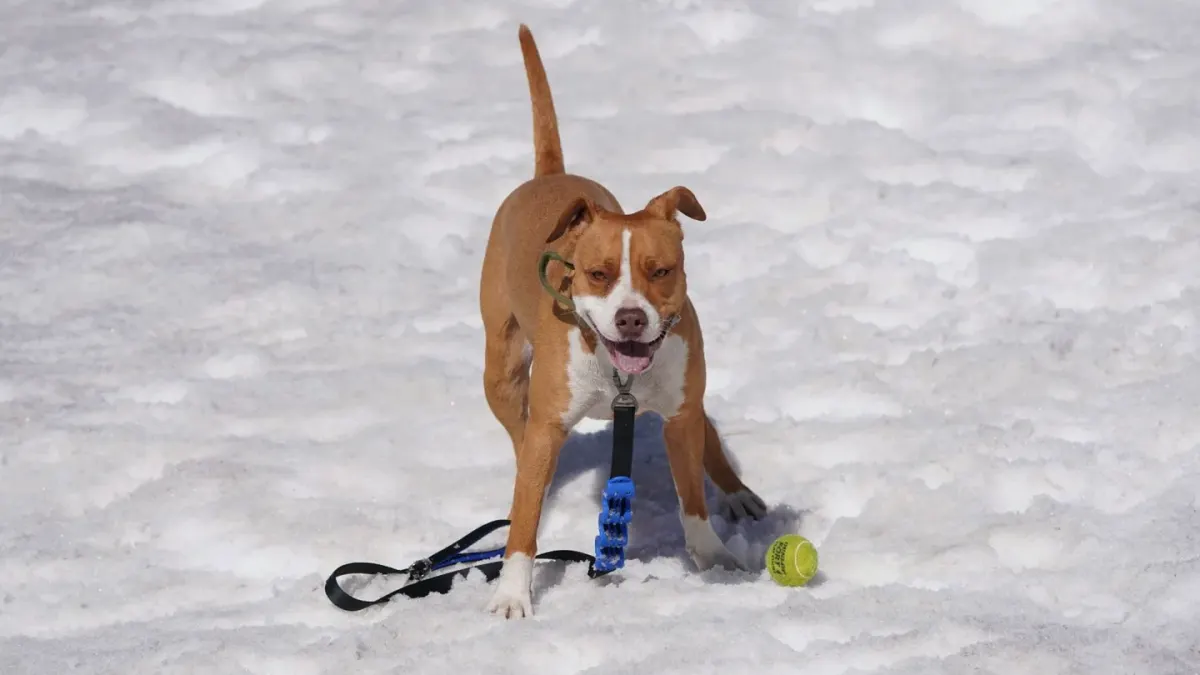
On this page
A 9-year-old, 78-pound Labrador Retriever shuffled into the rehab room after a winter of short leash walks and long naps. His owner worried about his slowing on stairs and a subtle shift of weight away from the left hind leg after 10 minutes on a trail. On exam his left thigh measured visibly smaller, his sit was crooked, and he needed two attempts to rise from a down on slick flooring. We did not start with more miles. We started with five controlled sit-to-stands per day, footing work, and a plan to rebuild the quadriceps before asking the stifle to do more.
The thigh works like a living brace
The quadriceps in front and the hamstrings behind do more than move the leg. They compress and guide the stifle and hip through each step, limiting shear, tibial thrust, and wobble that cartilage and ligaments otherwise absorb. When those muscles lose mass — after injury, arthritis pain, or just a sedentary eight to twelve weeks — peak joint forces land on a smaller cushion.
Muscle is the brace you cannot take off.
That is why rehabilitation specialists watch thigh circumference and symmetry so closely. Atrophy is not cosmetic. A weaker quadriceps fatigues earlier, control slips late in a walk, and the dog starts to shift load, bunny-hop, or sit sideways. The Merck Veterinary Manual describes osteoarthritis as a cycle of cartilage change, inflammation, and altered loading, and loss of supporting muscle keeps that cycle turning. VCA Hospitals makes the same practical point for owners: maintaining muscle and a lean body condition may help support mobility in dogs with arthritis.
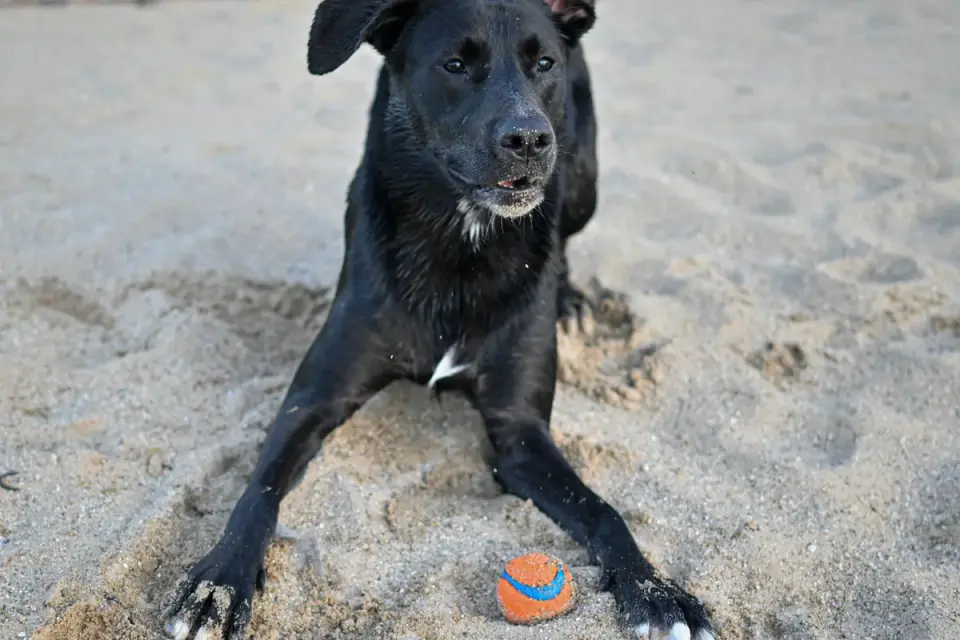
What stronger quads change inside the joint
Mechanism first. Each stride sends ground-reaction force up through the paw into the stifle and hip. Strong, well-timed quadriceps and gluteal muscles extend the joints smoothly, slow flexion on landing, and keep the patella and femoral head tracking where cartilage is thickest. That distribution matters because cartilage has no blood supply to repair quickly; it depends on even loading and joint motion to circulate synovial fluid.
When strength improves, three things change that owners can feel. Stance time evens out between hind legs. The dog rises with less armchair pushing from the front limbs. Late-walk stiffness shortens. None of that reverses arthritis, and I do not frame muscle as a cure. It may help support joint function by reducing the peak stress per step and preserving range of motion, which is exactly what nutritional and rehab evidence can realistically defend.
A stocky 6-year-old bully mix showed the tradeoff clearly. His owner had done the diligent thing for three months: adding a third daily walk, stretching it from 0.5 to 2 miles, hoping more movement would rebuild his hind end. Instead his thighs stayed soft, he began skipping for six to eight strides after chasing a ball, and he lay down for most of the evening afterward. More impact without strength only repeated the same overload. We cut the long pounding walk back to two 15-minute sessions, replaced fetch with five-minute incline and sit-to-stand blocks three times weekly, and his post-exercise lag dropped from hours to about 20 minutes within a month.
How to build thigh strength without grinding the joint
My recommendation is boring on purpose: progressive, low-impact hind-limb loading plus weight control, before distance or speed. Food therapy and supplement science have a supporting role for diet adequacy and recovery nutrition, but they cannot contract a muscle fiber. If a randomized trial showed glucosamine or green-lipped mussel alone preserved thigh circumference after cruciate injury as well as structured exercise does, I would change that hierarchy. That trial does not exist, and the current evidence does not support swapping a pill for reps.
Use this sequence:
Sit-to-stands on carpet or yoga mats. Ask for a square sit, then a straight forward stand without lunging. Start with 3 to 5 repetitions once daily, rest a day between sessions, and add one repetition per week toward 8 to 10 if form stays clean.
Incline and surface work. Slow walks up a gentle grassy hill for 40 to 60 yards, or cavaletti poles at hock height for 4 to 6 passes, recruit quadriceps and hamstrings with less impact than running. Keep the leash loose and the pace walking.
Water and weight. For arthritic or overweight dogs, chest-deep wading or an underwater treadmill unloads joints while resistance builds muscle. Pair it with measured feeding to keep ribs easily felt; every extra pound multiplies hind-limb load.
Stop or scale back for sharp lameness, swelling, a new head bob, or soreness lasting more than 24 hours. Those dogs need a veterinary exam, not a harder program. For structured progressions by condition, I often point owners to my comparisons of Swimming vs Walking for an Arthritic Dog: What Actually Protects the Joint and Best Low-Impact Activities for Overweight Dogs.
Strength returns slowly, then all at once.
Where nutrition fits, in plain terms
Adequate high-quality protein, balanced calcium and phosphorus, vitamin D, and omega-3 fatty acids from food may help support the nutritional foundation muscle and joint tissues need during a training program. That claim is grounded in nutritional evidence, not in a promise of regrown cartilage. Joint-support ingredients are among the most studied in this space, but I weigh them as adjuncts: useful for diet completeness and comfort as part of a whole-patient plan, not replacements for loading, weight control, and pain management when pain blocks movement.
An 11-year-old small terrier mix with no yard illustrates when to bend the usual hill-and-trail advice. Her owner lived on the third floor and worked 10-hour shifts, so outdoor incline work happened only twice a week. We adapted with hallway cavaletti made from broom handles, three-minute cookie-stretch and weight-shift sessions on a bath mat, and four short indoor play bouts instead of one long walk. Within six weeks she climbed all 32 stairs without a mid-landing rest for the first time that year, and her owner kept the routine because it fit apartment life. Owners without outdoor space can borrow the same structure from How to Exercise a Dog With No Yard and rebuild hind-limb endurance in small doses.
If your dog is already limping, post-surgical, or losing thigh mass quickly, get a rehab evaluation before pushing reps. For senior dogs starting from significant atrophy, the staged approach in How to Rebuild Muscle in a Senior Dog pairs well with the mechanics above. Build the engine first, then ask for mileage.
Frequently asked questions
How do I know if my dog has lost thigh muscle?
Compare the width and firmness of the left and right thighs, watch for a crooked sit, bunny-hopping, or needing extra effort to rise. A rehab exam with thigh measurements confirms whether the difference is significant.
What is the safest first exercise for weak hind legs?
Slow, controlled sit-to-stands on non-slip footing, 3 to 5 clean reps with rest days between, plus short leash walks. Stop if lameness sharpens or soreness lasts beyond 24 hours.
Can supplements build thigh muscle by themselves?
No. Adequate protein and balanced nutrition may help support muscle maintenance during training, but strength requires progressive loading and weight control. Use nutrition as support for the program, not a substitute.
Sources
- Arthritis in Dogs — VCA Hospitals