The Science of Detraining and Fitness Loss in Dogs
Why fit dogs lose conditioning fast after rest, what fades first, and how to rebuild fitness without joint setbacks.
Fitness fades faster than it builds, and a smart rebuild protects joints while stamina returns.
On this page
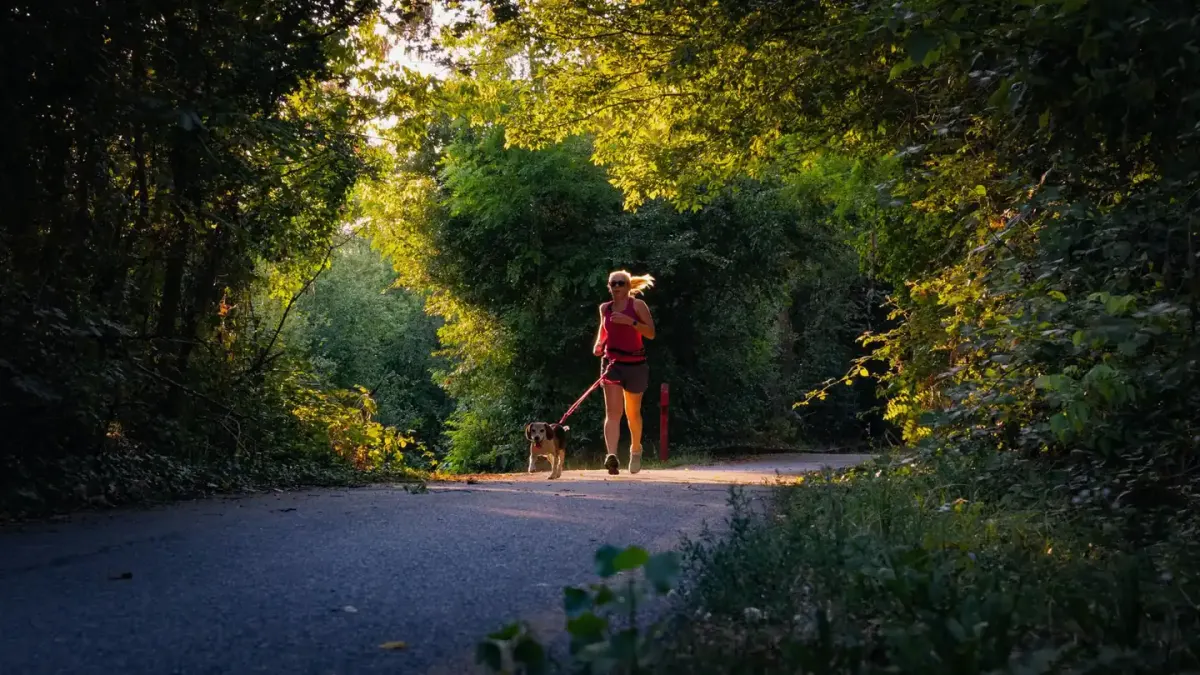
A four-year-old, 48-pound field-bred Labrador came back to see me in late February after six weeks of almost no real exercise. Her owner, a trail runner, had sprained an ankle in early January, so five-mile runs became a quick loop around the block and long days on a dog bed. At her fall check she could hold a steady trot for 40 minutes and breathe easy; now she panted hard after 12 minutes, lagged on hills, and her thighs looked visibly flatter when I ran my hands over them. The owner asked the question I hear every spring: did we really lose all of that fitness in six weeks, and do we have to start over?
The short answer is yes, some of it, and no, not from zero. Conditioning is specific and reversible. What you built through repetitive aerobic work, strength loading, and practiced movement starts to unwind once the stimulus stops, and different systems unwind at different speeds. Cardiovascular fitness fades first, muscle follows, and practiced skill lasts longest. That order shapes how I prioritize a return.
What actually fades first when training stops
Endurance is the most fragile trait. In both human and canine athletes, plasma volume contracts within days to weeks of inactivity, stroke volume falls, and heart rate runs higher for the same pace. The classic human detraining synthesis in the Journal of Sports Sciences describes that early loss of blood volume and oxidative capacity, with declines in VO2max measurable in two to four weeks and continuing if inactivity persists.
Dogs follow the same pattern, though we have fewer direct VO2max detraining trials in pet dogs. Sled-dog and sporting-dog conditioning work shows that aerobic enzymes, mitochondrial density, and heat tolerance respond to steady training and then regress without it. Owners usually notice it as heavier panting, slower recovery between bursts, and a dog that quits earlier, not as lameness. That is cardiovascular detraining, not joint damage.
Muscle changes come next. Disuse reduces protein synthesis while breakdown continues, so thigh and loin muscling softens within two to six weeks of strict rest, faster after surgery or crate confinement. Strength fades more slowly than endurance, but power and balance erode because the nervous system stops practicing coordinated work.
What lingers is skill. A dog that learned to trot cavaletti, swim cleanly, or pace herself on a run retains motor patterns for months. She will look rusty, not clueless.
Why a soft dog is a sore dog
Loss of fitness changes joint loading. Less quadriceps and gluteal support means more shear through the stifle and more concussion through the elbow and carpus on turns. Less aerobic capacity means earlier fatigue, and tired dogs land harder, corner wider, and stumble more.
This is why I weigh what a supplement can realistically do for diet, mobility, and recovery during a rebuild as supportive, not central. Food therapy and balanced nutrition maintain the substrate for muscle protein synthesis, joint-support ingredients may help support normal joint structure and mobility during increased activity, and rest still does the heavy lifting for irritated tissue. Nothing in a chew replaces graded loading.
For context on where activity meets arthritis risk, the Merck Veterinary Manual notes that controlled exercise remains part of osteoarthritis management in small animals, while excessive or uncontrolled impact worsens signs. Detraining pushes dogs toward both extremes at once: too little movement to stay conditioned, then too much on a weekend rebound.
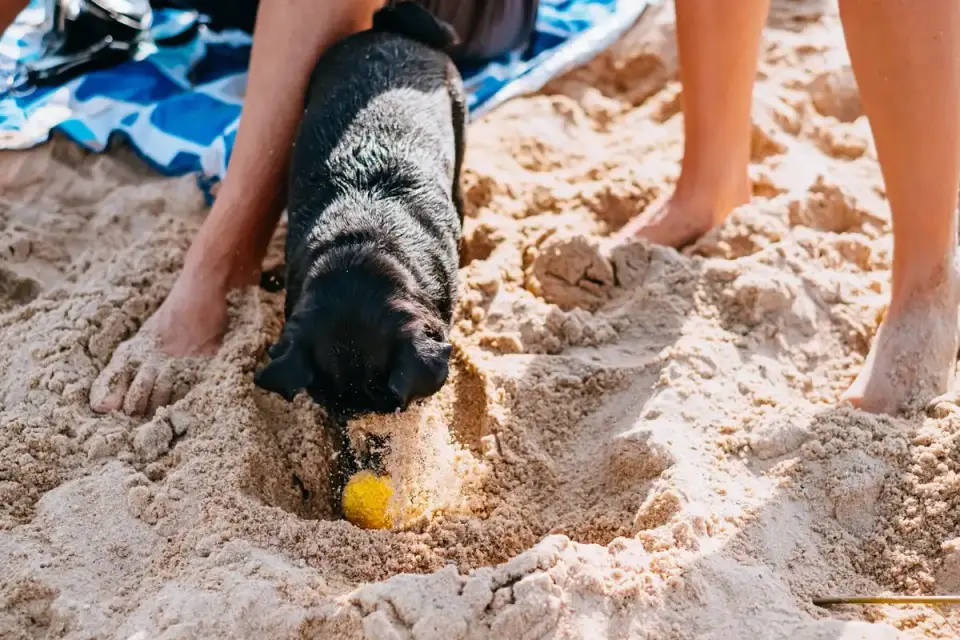
Mid-January brought a different version of the same problem. A seven-year-old, 62-pound Golden Retriever mix had been my poster dog for steady habits: three 25-minute leash walks on weekdays plus a 90-minute hike every Sunday. Then the owners moved, the routine collapsed for five weeks, and fetch in a small courtyard replaced the hikes. He came in with a puffy-feeling front, a reluctance to jump into the SUV, and an owner convinced the new fetch games had injured his shoulder. On exam his shoulder was stable but his topline was soft, his nails were long from no road walking, and his weekend tally told the story: zero hikes in 35 days, then two hard 40-minute fetch sessions in one weekend. We did not need advanced imaging. We needed to name the tradeoff: short, intense bursts preserve excitement but not aerobic base, and they load shoulders far harder than distance walking.
How long loss takes, and how return should look
Timelines vary by age, starting fitness, illness, and how complete the rest was. A healthy adult dog kept on leash walks loses less than a dog on strict cage rest. A senior or overweight dog loses more function from the same layoff because there was less reserve to begin with.
I use broad bands, not promises. After two to three weeks of light activity, expect noticeably reduced stamina. After four to eight weeks, expect measurable muscle loss and longer recovery. After eight to twelve weeks of true inactivity, treat the dog as deconditioned and rebuild from roughly half the prior volume.
Rebuild with frequency before intensity. Daily controlled movement beats heroic weekends.
Start with two weeks of base: leash walks at a conversational pace, flat terrain, 15 to 25 minutes once or twice daily depending on size and orthopedic history. Add five to ten minutes per week if the dog recovers by the next morning with no prolonged panting, stiffness, or next-day reluctance. General pet-exercise guidance from VCA Hospitals makes the same point in plain language: build gradually and watch the individual dog rather than chasing a mileage target.
Then layer strength and skill. Hill walking, sit-to-stands, weight shifting, and cavaletti poles reload muscle without pounding. Save sprinting, sharp agility turns, and long off-leash runs until the dog can walk briskly for 45 minutes and recover within an hour.
Nutrition matters here in a quiet way. Adequate complete-and-balanced food, appropriate calories to avoid weight gain during rest, and enough high-quality protein give muscle something to rebuild with. Ingredients studied for joint support, including glucosamine, chondroitin, and omega-3 sources, may help support normal joint comfort and mobility as activity ramps up, but the evidence is mixed and ingredient-literate. I ground that integrative claim in nutritional evidence, not in a promise of repair.
Obedience to soreness rules the plan. Mild next-day tiredness is acceptable. Limping, lagging, lying down mid-walk, panting for hours, or stiffness lasting into the second day means you overshot.
When the usual rebuild has to bend
Not every dog can walk their way back. A nine-year-old, 34-pound beagle mix with early hind-end weakness showed me the exception in April. She had lost ground after eight weeks of winter ice and owner illness — down from a reliable 1.5-mile loop to struggling at 0.4 miles, with hind nails scuffing and a 2-pound winter weight gain to 36 pounds. Standard advice would have said add distance. Her stifles and spine said otherwise. We bent the plan toward water and surface instead of mileage: twice-weekly 15-minute supported swims at a rehab facility, four five-minute sniff walks on grass for motor engagement, and three sets of five assisted sit-to-stands every other day. Distance stayed short for a month while strength returned first.
That case is why I link detraining work to low-impact options. For dogs that cannot tolerate a straight mileage rebuild, rotations built around swimming, graded walking, and indoor alternatives keep loading controlled. Readers rebuilding a soft senior may find more detail in How to Rebuild Muscle in a Senior Dog and Is Swimming Good Exercise for Dogs? What the Water Actually Does to a Joint, and owners without outdoor space can borrow structure from How to Exercise a Dog With No Yard.
Detraining is normal physiology, not failure.
The dog that loses fitness in winter or after an injury is not broken. She is de-adapted, and re-adaptation follows the same rules that built her the first time: consistent submaximal work, progressive load, adequate food, and attention to recovery. Protect the first two weeks from enthusiasm, and the joints usually let the lungs catch up.
Frequently asked questions
How fast do dogs lose fitness after stopping exercise?
Stamina often slips within 2-3 weeks, with visible muscle loss by 4-8 weeks of true inactivity. Age, prior fitness, and how complete the rest was change the pace.
Should I rest a sore dog or keep rebuilding after a layoff?
Keep daily low-intensity movement unless there is lameness, swelling, or pain. Drop volume by half, stay on flat leash walks, and seek a vet exam if stiffness lasts beyond 24 hours or lameness appears.
Can joint supplements prevent detraining loss?
No. Balanced nutrition and graded activity drive reconditioning. Joint-support ingredients may help support normal mobility during the rebuild, but they do not replace training or prevent fitness loss.
Sources
- Detraining: loss of training-induced physiological and performance adaptations. Part I — Journal of Sports Sciences