The Science of Front-to-Rear Weight Distribution in Dogs
Why dogs carry ~60% of weight up front, how that shapes joint load, and how to exercise with it — not against it.
The science of front-to-rear weight balance explains why sore front legs change everything.
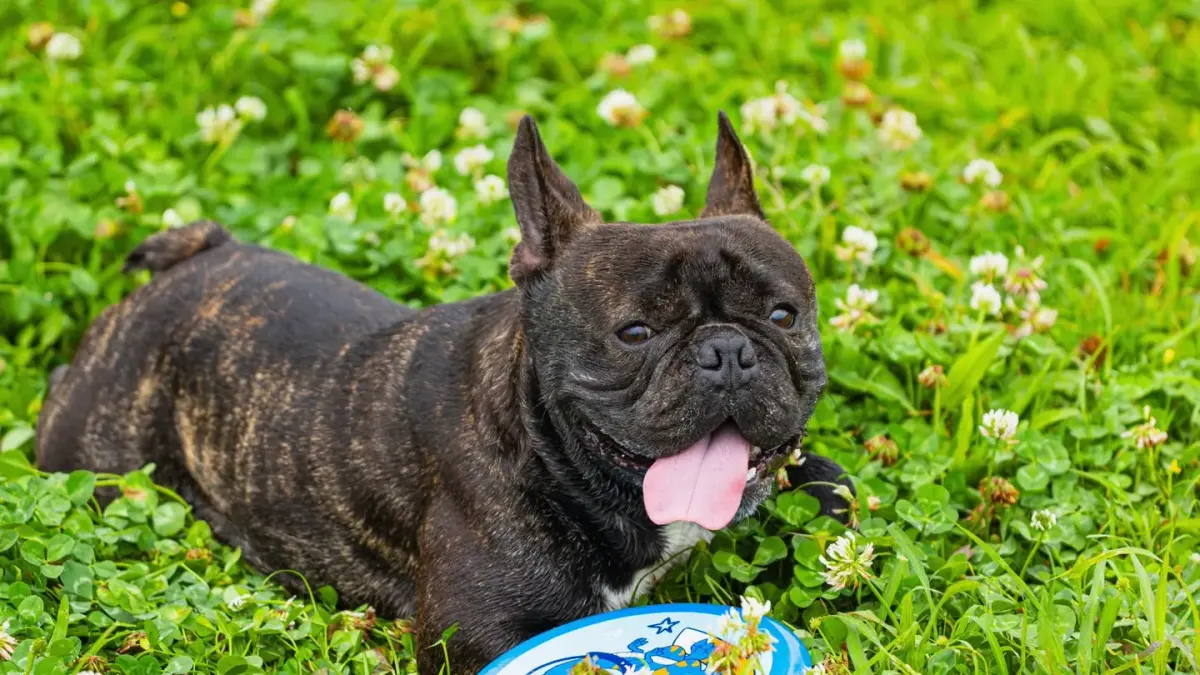
A 6-year-old, 72-pound Labrador Retriever came in for slowing on stairs and a short, choppy trot after weekend fetch. His owner was focused on his hips, which made sense for the breed, but his front was doing the talking. He stood with his forepaws slightly back under his chest, shifted away from his right shoulder, and turned his head in a tight arc rather than reaching low to a treat. That posture was the first clue that his usual 60-40 front-to-rear load had moved, and the sore leg was now forcing the other three to carry more than they were built for.
That is the core idea behind front-to-rear weight distribution. Healthy dogs at a standing walk carry roughly 60% of body weight on the thoracic limbs and 40% on the pelvic limbs, not because the front is stronger but because the head, neck, and chest sit over it. The American College of Veterinary Surgeons describes lameness evaluation as a whole-dog assessment for this reason, since a shift off one limb always loads another.
Why the front carries more than you think
The front limbs have no bony collarbone connection to the spine. They hang in a sling of muscle, tendon, and fascia, which absorbs shock well but fatigues and strains under repetitive impact. The hind limbs, by contrast, attach through the pelvis and powerful propulsive muscles built to push.
That design explains normal movement. At a walk the body vaults over a planted front leg while the hind leg drives. At a trot the diagonal pairs share load more evenly for a moment, then return to a front-biased pattern. When speed, slope, or a lowered head moves the center of mass forward, forelimb peak forces rise further. It is not a flaw. It is how a quadruped built for sniffing, carrying, and decelerating with the front end works.
This is where I get decisive about priorities. Weigh what a supplement can realistically do for diet, mobility, and recovery, and front-end overload belongs first to mechanics, body condition, and training surface. Nutritional support may help support normal cartilage and connective tissue, but it cannot unload a shoulder that takes thousands of extra pounds of cumulative force on downhill retrieves.
What shifts the balance, and what that looks like
Pain is the most common shifter. A sore elbow unloads by a few percentage points, which sounds small until the opposite forelimb and the diagonal hind limb absorb it step after step. Conformation matters too. A long back, straight shoulders, heavy chest, or upright hocks changes where force enters the joint. So do age and fitness, excess weight, slippery floors, and fatigue.
Watch for the compensations rather than only the limp. A dog that bunny-hops at a gallop, sits with legs splayed, refuses a down, shortens the front stride, bobbles the head, or lies down on walks is often redistributing load.

He had been the weekend-warrior type, the kind of dog who would sprint a 1.5-mile loop of fetch at the park on Saturday, swim for twenty minutes, then sleep hard and wake up stiff. For three months his owner had added more throw-and-chase to tire him out, assuming hind-end power would protect him. Instead his braking distance grew longer, his turns widened, and he started sitting out the fourth or fifth throw. The failed approach was not lack of effort. It was loading a front-biased animal with repeated deceleration, the exact task forelimbs already do most, without building the trunk and hind-end strength to share it.
That tradeoff is common. Fetch, downhill running, stairs, and jumping concentrate forelimb impact. Uphill walking at a controlled pace, cavaletti poles, and swimming with good form shift more work to hind-end propulsion and core stability. The National Library of Medicine indexes the canine kinetic studies behind that reasoning, and the pattern across them is consistent even as numbers vary by breed, speed, and force-plate method.
Training with the 60-40 split instead of fighting it
A short paragraph matters here. Unload the front by strengthening the rear.
Start with body condition, because every extra pound lands disproportionately up front. Then audit the week the way a rehab clinician would. Most pet dogs do better with frequent, moderate loading than with one exhausting bout. That is why I often point owners toward Fetch vs. Structured Walks: Which Actually Serves a Dog’s Joints Better? and Dog Treadmill vs. Outdoor Walking: What Actually Protects the Joints when they are deciding how to replace chaotic sprinting with measurable work.
Build hind-end engagement with sit-to-stands, slow hill ascents on a short leash, step-ups, and pole work at elbow height or lower. Keep sessions short, reward a square sit and a level back, and stop before form collapses. For dogs that need to rebuild after time off, How to Rebuild Muscle in a Senior Dog and Best Low-Impact Activities for Overweight Dogs lay out progressions that protect stiff joints while restoring propulsion.
After fourteen nights of that switch, the change was easier to measure than to describe. The same stocky, 9-year-old beagle mix who had been pausing twice on a half-block loop was now finishing the loop with one pause, rising from her bed without a groan, and holding a three-second stand on a foam pad. Her owner had bent the usual advice by cutting total walk time by a third, adding five minutes of incline and pole work on soft footing, and feeding the last meal an hour later so evening stiffness did not dictate the morning. Less mileage, better-distributed effort.
Where does nutrition fit in that picture. Ground an integrative claim in the nutritional evidence. Ingredients like glucosamine, chondroitin, omega-3s, and green-lipped mussel are studied for joint support, and they may help support normal joint structure and mobility as part of a complete diet and exercise plan. What they do not do is change physics. Use them to support the tissues doing the work, not to justify more impact than the front end can absorb.
Sources
- American College of Veterinary Surgeons — American College of Veterinary Surgeons
- PubMed Central Search — National Library of Medicine